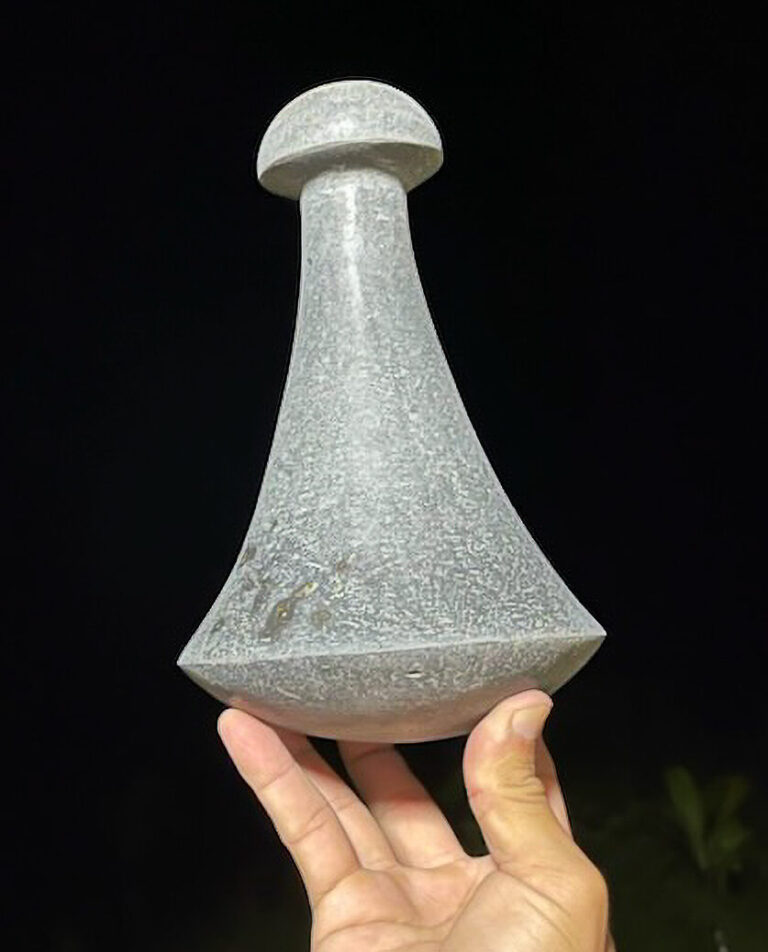
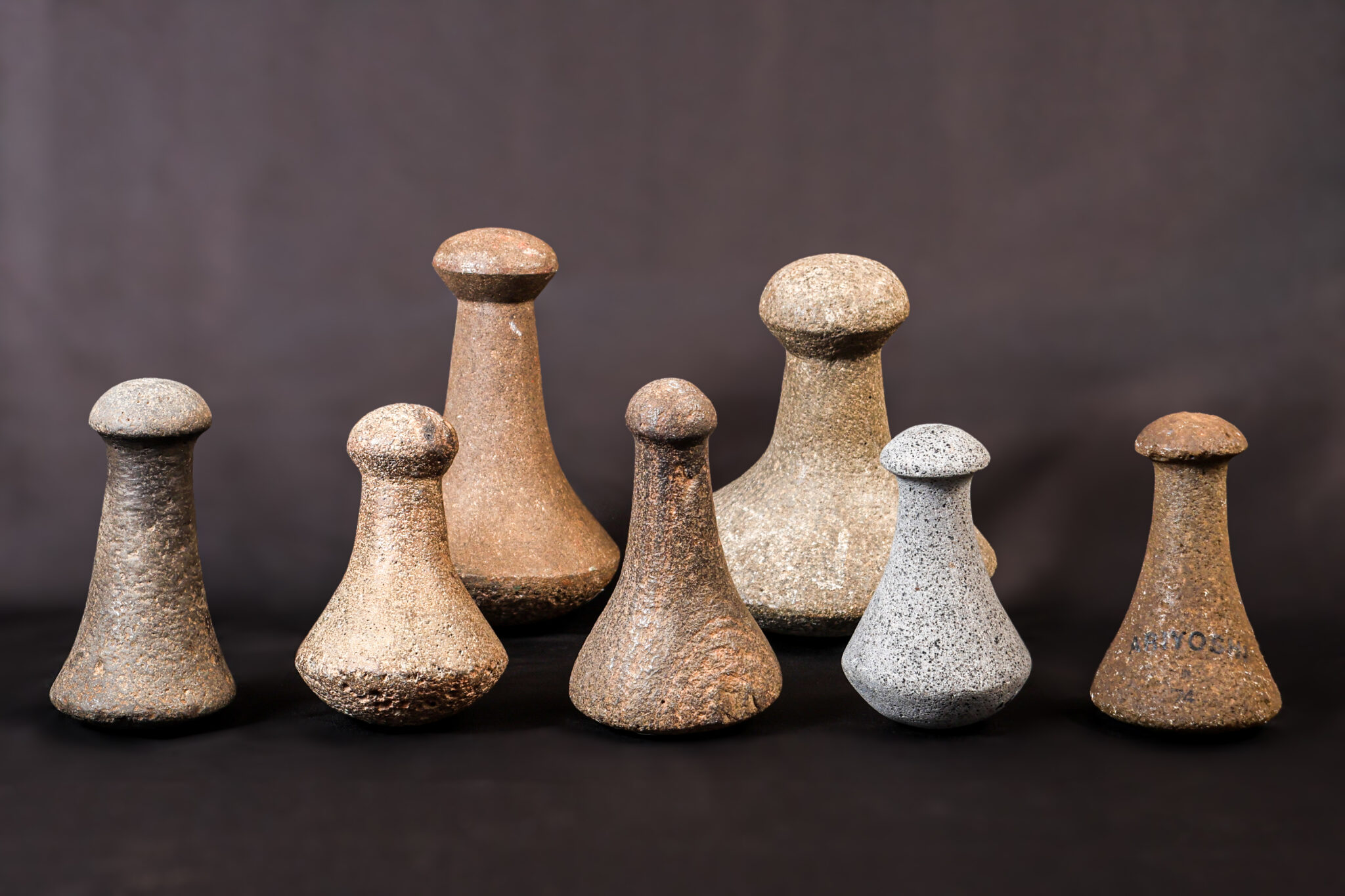
The fundamental working tool of Hawaiians in the making of poi, the principal staple of the traditional Hawaiian diet.
There is no doubt that the Hawaiian poi pounder is among the most recognized Hawaiian artifacts. It was used historically to mash the steamed or baked root of the taro plant (kalo), mixing it with water to create the nourishing paste known as poi.
No collection of Hawaiian artifacts is complete without a knob poi pounder. Aesthetically, they are beautiful when hand-shaped from dense basalt stone or other materials such as coral, sandstone, or hematite.
Metal poi pounders were later produced by early Germans who came to Hawaiʻi following Western contact. Wooden and ivory pounders, along with examples made from assorted materials, were often created as gifts or display pieces rather than for practical use.
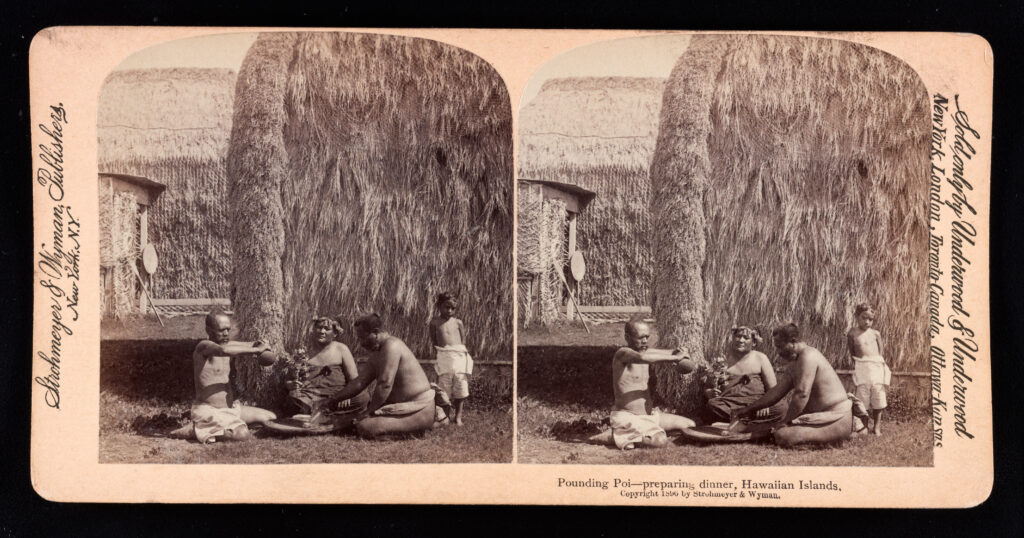
"Pounding Poi—preparing dinner, Hawaiian Islands," photographed and published by Strohmeyer & Wyman, distributed by Underwood & Underwood, 1896.
Poi was—and remains—a staple in Hawaiʻi. While there are now commercial methods for producing poi from kalo, many believe the traditional method yields the best results. Poi boards are highly collectible and range in size from large two-man boards to smaller one-man boards. For the most part, poi preparation was the work of men only, although Kauaʻi was an exception, according to some accounts.
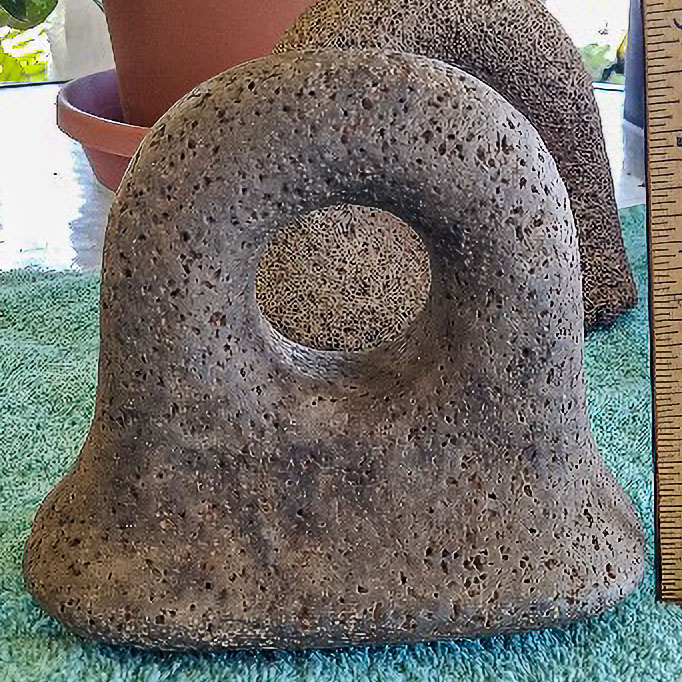
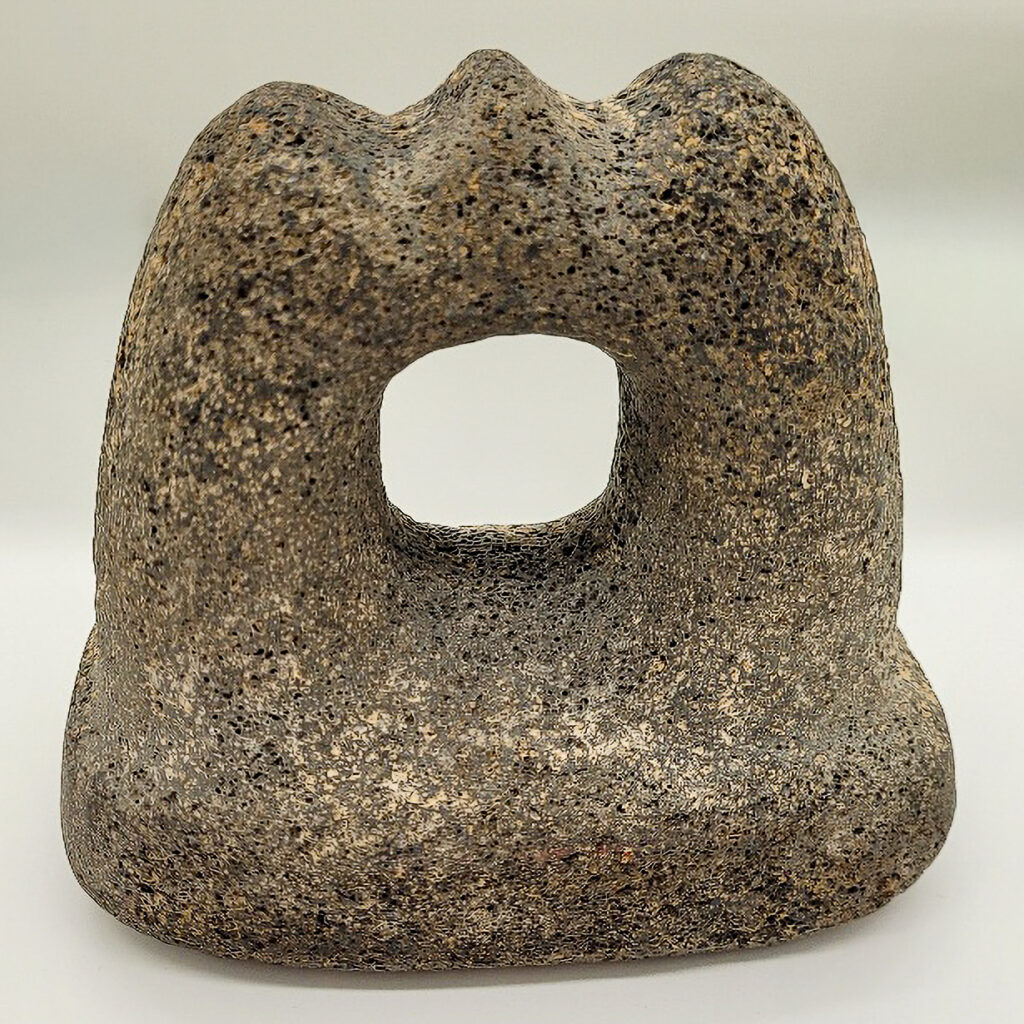
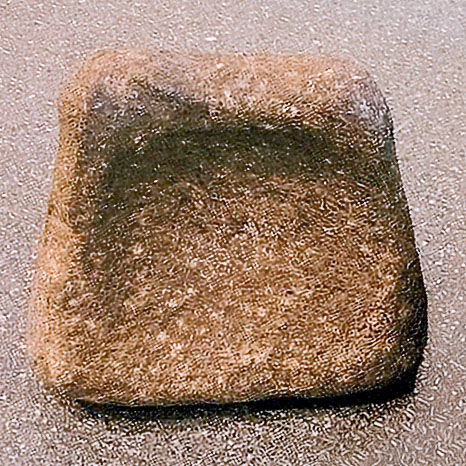
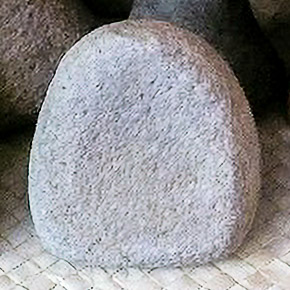
These four images illustrate the Kauaʻi variety of poi pounders: ring, stirrup, and the unusual crown stirrup pounder with a hole in the center (extremely rare). Several theories surround these forms, some drawing parallels to pounders found in South America and tools used to mash sweet potatoes as well as kalo.
The Kaua‘i pounders were developed possibly due to women’s involvement in making poi, as these forms were easier to use with two hands. The heavier knob type were better used with one hand.
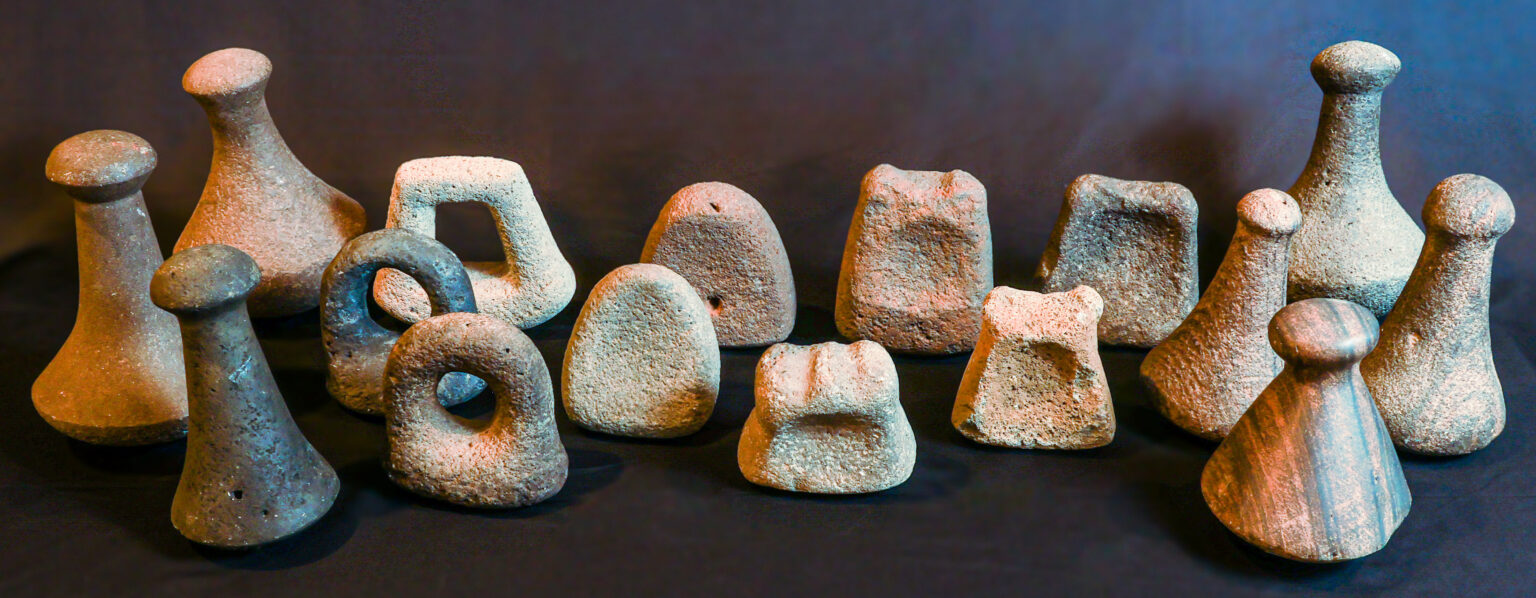
Shown here is a representative assortment of Hawaiian poi pounder styles. Included are Kauaʻi examples—stirrup and ring pounders—alongside known pounders made from distinct types of basalt.
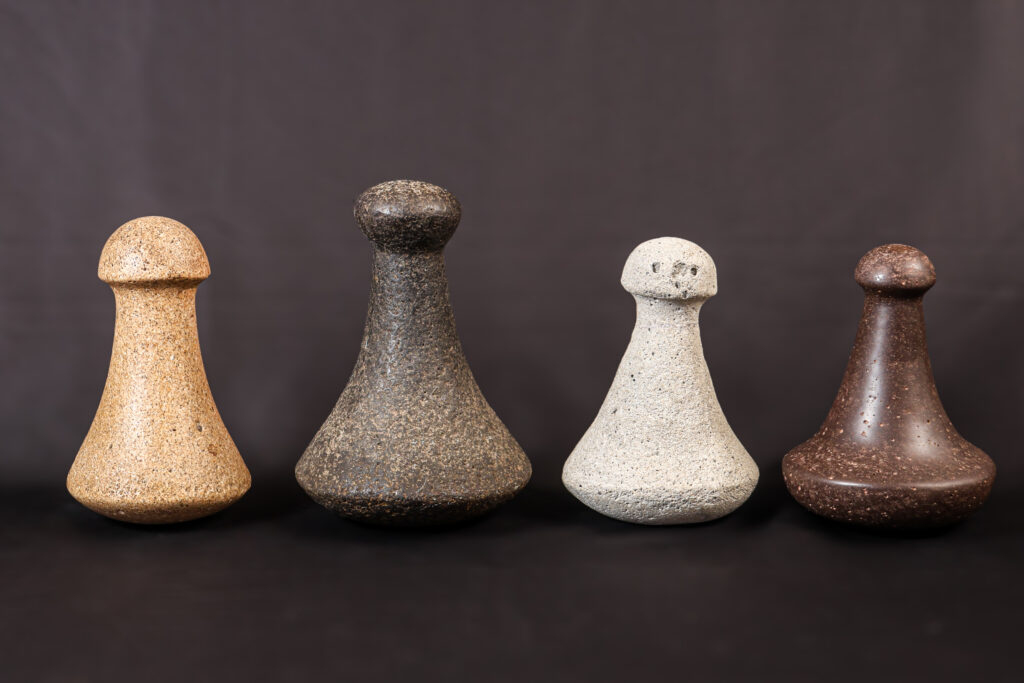
The four knob poi pounders featured here are crafted from four distinct materials. From left to right: sandstone, dark basalt, coral, and exceedingly rare hematite. Each is beautifully shaped and balanced.
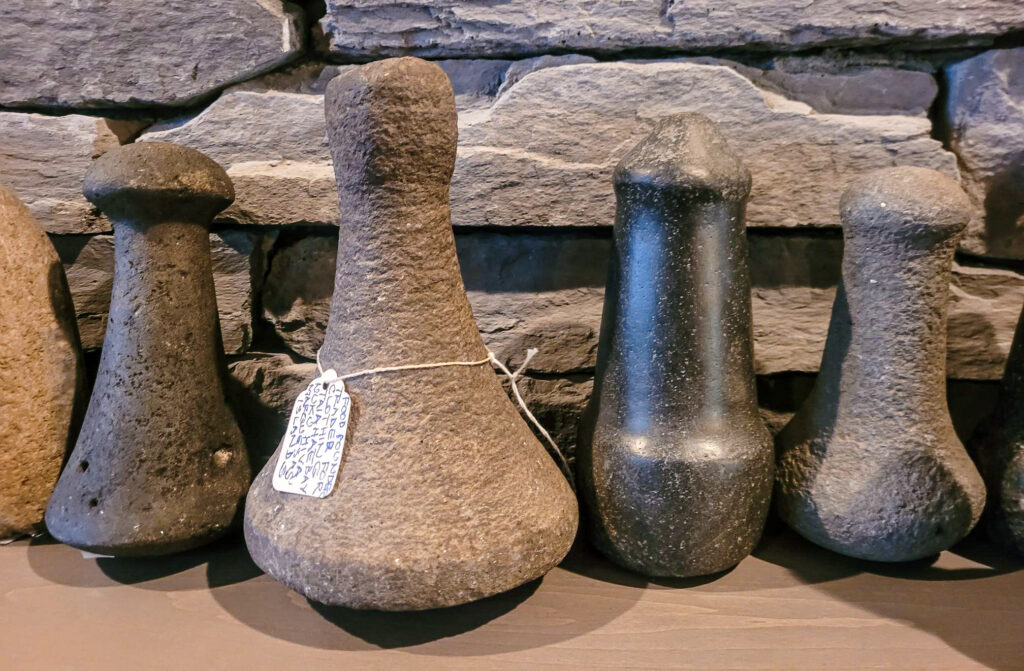
Displayed on a fireplace hearth are various pounders, from Hawaiʻi (from left to right), a Marquesan example (formerly from the Leo Fortes collection), a Columbia River Indian masher, and a small knob poi pounder that may have served as a traveling piece.
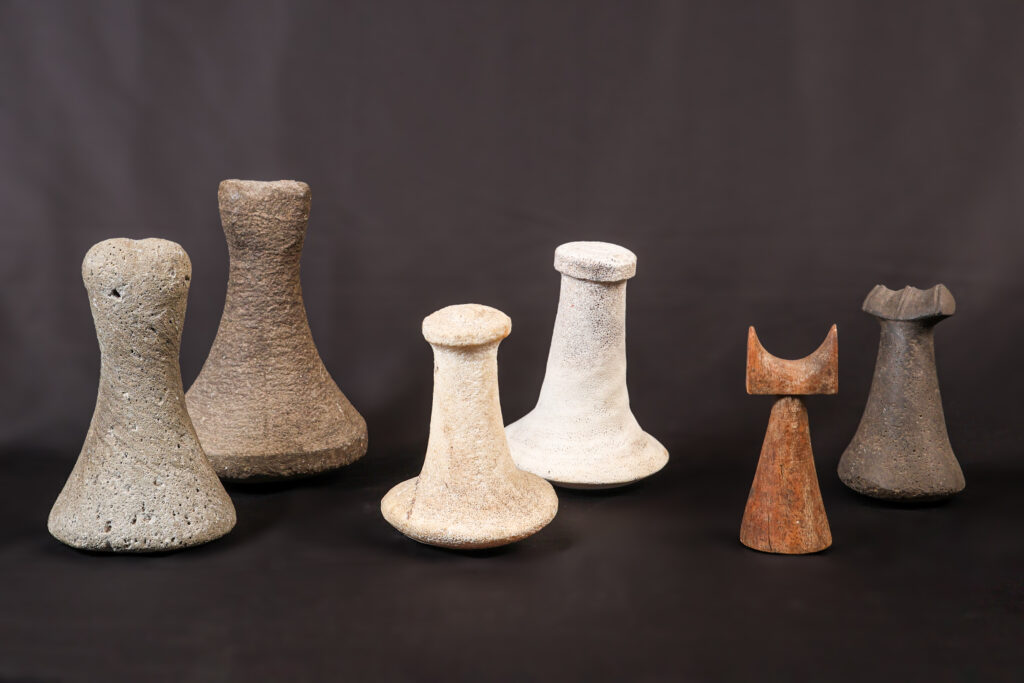
Pounders are found throughout Polynesia. Pictured on the left are two Marquesan pounders. In the center are pounders believed to originate from Micronesia, where there was no basalt but plenty of coral. The two pounders on the right are from Tahiti, one made of wood and the other of basalt.
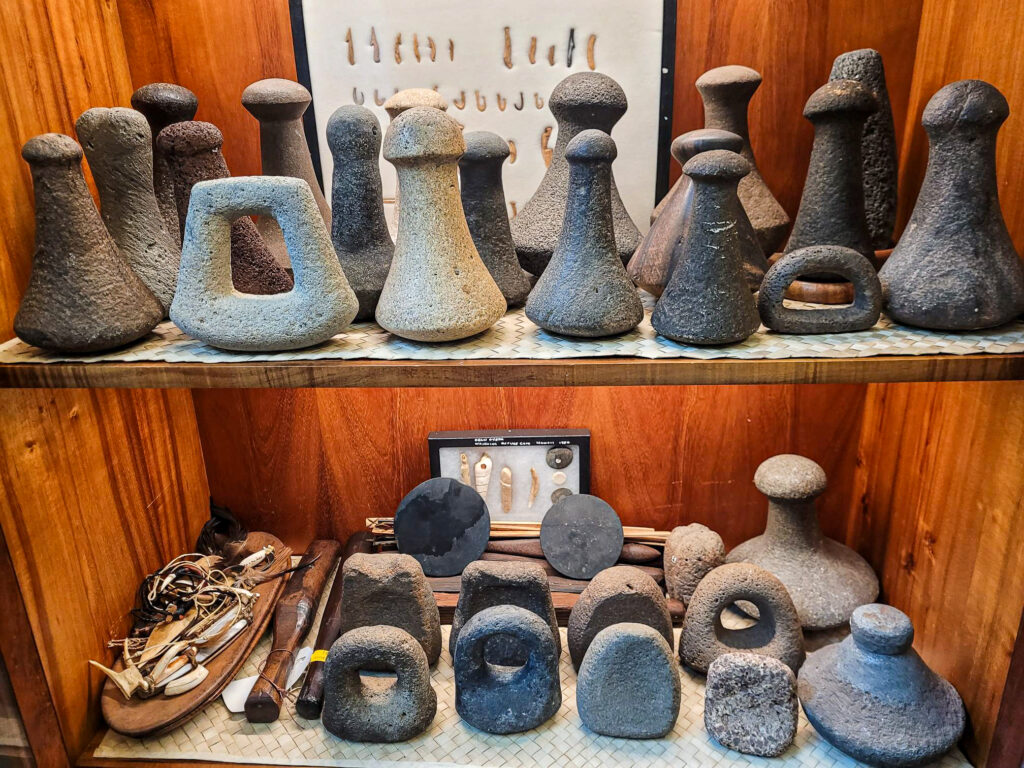
A nice display of primarily Hawaiian artifacts, including stone pounders, fishhooks, bone hooks and picks, miscellaneous shell artifacts, and wooden beaters.
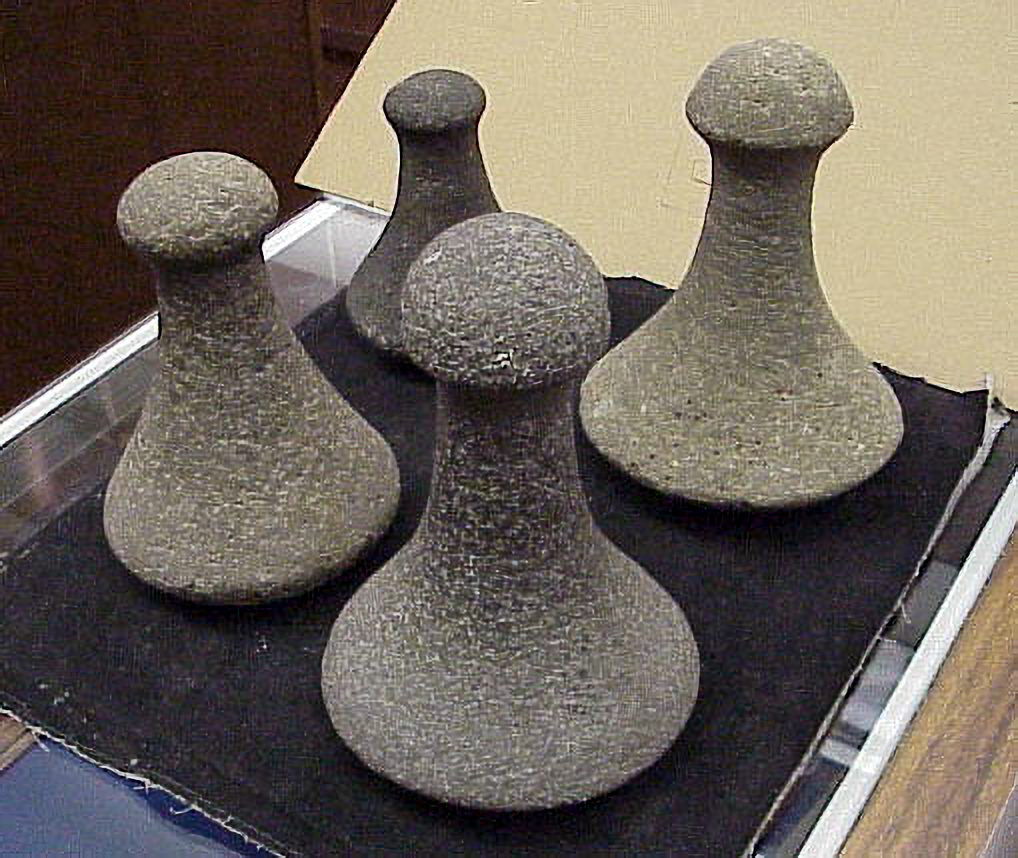
Four knob poi pounders of varying sizes, from very large examples to a small piece possibly used for travel. Traveling pounders were taken by aliʻi as they journeyed throughout the islands, ensuring their poi was prepared by their own attendants using their own implements.
Please visit our eBay store to view pounders currently available for sale, or contact us with any questions regarding our current collection at hawaiiancollectible@gmail.com